

Maximizing Business Performance with NodeJS Hosting: A Complete Guide

Speaking about maximizing business performance, as usual, we think about strategic goals, employee engagement, and customer satisfaction. But we should not forget about the technical part of success. Investing in development and technology to streamline processes is one of the pain points for organizations. Improving overall effectiveness includes implementing the right software. Over the past few years, Node.js has become an extremely popular component of modern web development.
Node.js is an event-driven system that has emerged as a robust runtime environment for creating fast and data-intensive applications. The right hosting for Node JS significantly improves business performance with real-time speed, agility, and efficient use of resources. This means that entire web portals can be implemented using a single “stack” of technologies. That significantly simplifies and speeds up the development and maintenance of projects. Node.js hosting has a number of advantages over other programming languages, and this explains its popularity in web application development. Whether you have an eCommerce site, are dealing with enterprise-level APIs, or are creating a real-time chat application, discover the benefits of Node.js hosting services, along with insights into the cPanel hosting price, to make the right choice.
How Node.JS Hosting Enhances Business Performance?
High Performance and Speed
Node.js is built on the Google-originated V8 JavaScript engine. This is a runtime environment that translates what a web developer writes into machine code for faster execution. It gives Node.js an inherent performance advantage. Low-level code becomes fast and easy for a machine to recognize, and that makes it ideal for high-traffic applications. Node.js’ non-blocking, event-driven architecture ensures processes run concurrently without slowing down the server. When you host Node.js applications or websites on a reliable server, the efficiency rate multiplies. It allows businesses to handle more requests with minimal latency.
Selecting Node.js hosting allows your application to use optimized server settings to accommodate asynchronous operations. This translates to quicker page loads and an improved overall user experience. From processing API requests and executing chat applications to processing user input in real time, the hosting environment enhances Node.js’s responsiveness and performance.
Scalability for Growing Business Needs
Scalability is a critical aspect for companies undergoing growth in web traffic. Thanks to its event-driven, non-blocking architecture, Node.js helps to handle concurrent requests efficiently. Unlike traditional platforms that spawn new threads for every connection, Node.js runs on a single thread with asynchronous callbacks. That means you can serve more users with fewer resources, all while maintaining high performance. Node.js accommodates horizontal and vertical scaling. Therefore, it is simpler to increase resources or on-demand instances with it. Node.js hosting allows you to scale applications seamlessly without impacting the user experience, and your company remains responsive to growth.
But scalability doesn’t happen automatically. Here’s how to make it work:
- Cloud-Native Hosting: Leverage platforms like AWS, Azure, or Google Cloud, which allow horizontal scaling. Adding more server instances as traffic grows, then shrinking back during quieter times to save costs.
- Load Balancing: Distribute incoming traffic across multiple Node.js instances using load balancers like Nginx or HAProxy, ensuring no single server gets overwhelmed.
- Microservices Architecture: Break your application into smaller, independent services. This allows teams to scale only what’s needed (e.g., the payments service during checkout surges), reducing bloat and increasing agility.
- Containerization & Orchestration: Tools like Docker and Kubernetes let you package and deploy Node.js apps consistently, with auto-scaling capabilities baked in.
- Asynchronous Programming: Encourage best practices in writing non-blocking, efficient code that supports thousands of simultaneous connections without a performance hit.
Web hosts like MilesWeb offer containerization and load-balancing support with their Node.js hosting plans. It ideally enables microservices deployment and workload division. It enhances performance and enables the application to automatically scale to handle traffic surges—ideal for businesses with variable traffic volume.
Improved Developer Productivity and Workflow
Node.js framework is functional in website development’s front and back end. It simplifies the process and enhances collaboration between teams. Hosting environments customized for Node.js typically support modern CI/CD workflows, automated deployments, and version control integration. It collectively enhances developer productivity.
With managed Node.js hosting, coders can focus on coding rather than infrastructure. One-click deployment, staging environments, and auto-scaling features allow quicker iterations and updates, allowing businesses to stay competitive through speedier release cycles.
Enhanced Security and Reliability
Online businesses are concerned about their cybersecurity. Reliable Node.js hosting has built-in security measures like firewalls, DDoS protection, regular patching, and SSL certificates. These perks safeguard applications from external threats and ensure uninterrupted service availability. Node.js hosting platforms can be fortified with advanced security measures and reliability protocols to protect both your application and your users’ data.
Security Essentials for Node.js Hosting
- HTTPS Everywhere: Enforce SSL/TLS encryption to secure all data in transit – a must-have for e-commerce, financial services, and any site handling user credentials.
- Environment Variable Management: Use
.envfiles or secure secrets managers (like AWS Secrets Manager or HashiCorp Vault) to prevent sensitive data exposure in your codebase. - Middleware Protection: Implement tools like
Helmet.jsto set proper HTTP headers that block common vulnerabilities (e.g., XSS, clickjacking). - Rate Limiting and DDoS Protection: Prevent abuse and traffic floods with libraries like
express-rate-limitor services like Cloudflare that shield your app from malicious surges. - Input Validation and Sanitization: Prevent SQL injection, command injection, and other common attacks by validating and cleaning user inputs through tools like Joi or express-validator.
- Automated Security Patching: Use dependency management tools like
npm auditor GitHub’s Dependabot to detect and patch vulnerabilities before they become threats.
Reliability You Can Count On
- Auto-Restart & Process Management: Tools like PM2 ensure your app restarts if it crashes, reducing downtime and keeping the system resilient.
- Uptime Guarantees & Redundant Infrastructure: Choose hosting providers with 99.9%+ uptime SLAs, backed by redundant datacenters to eliminate single points of failure.
- Logging and Monitoring: Services like New Relic, Datadog, or LogRocket allow real-time performance tracking and issue diagnosis, so problems get resolved before users even notice.
- Backup & Disaster Recovery: Automate regular backups of both code and databases, and test recovery procedures to ensure you can bounce back quickly from any disruption.
Quality Node.js hosting features 24/7 monitoring and automatic backups to reduce downtime and potential data loss. Businesses get robust disaster recovery processes and infrastructure redundancy so that activities can be returned online quickly and with little disruption, even during an outage.
Efficient Scalability and Resource Management
Node.js has one of its core strengths, which is scalability. Its hosting plans are built to accommodate growing online business requirements. Whether your application has hundreds or millions of users, you can quickly scale resources without compromising the performance or user experience.
Most contemporary Node.js hosting companies favor containerization technologies like Docker and orchestration technologies like Kubernetes. These technologies simplify the management of microservices and workload distribution. As a result, companies can deploy updates faster, manage traffic spikes more effectively, and provide consistent uptime—factors that contribute to better business performance.
Robust Support for Real-Time Applications
Node.js is known for building real-time applications like live chats, online gaming, collaboration tools, or tracking dashboards. It enables bi-directional communication using WebSockets, making it ideal for environments where data must move instantly between the server and the client. With Node.js hosting, you get an infrastructure that supports these features seamlessly and reliably.
Node. Js-optimized hosting solutions might already be pre-equipped with real-time protocol support and socket management at a large scale. With this, building responsive, always-on digital experiences for businesses becomes easier. For business organizations ready to offer real-time features without considerable lag and downtime, choosing a Node.js hosting solution is a strategic move to enjoy a competitive edge.
At the heart of Node.js lies an event-driven, non-blocking I/O model, which makes it uniquely suited to handle rapid, bi-directional communication between client and server. This architecture enables the seamless push of data in real-time, without refreshing the page or waiting for polling intervals.
Key Technologies That Power Real-Time Features
- WebSockets: Node.js works natively with WebSockets through libraries like
Socket.io, which enables two-way communication in milliseconds. - Server-Sent Events (SSE): For one-way real-time data flow (e.g., live notifications), Node.js can stream server updates efficiently to the browser.
- Redis Pub/Sub: For distributed real-time systems, Redis is often used with Node.js to broadcast messages between multiple services and instances.
Businesses Successfully Using Node.js
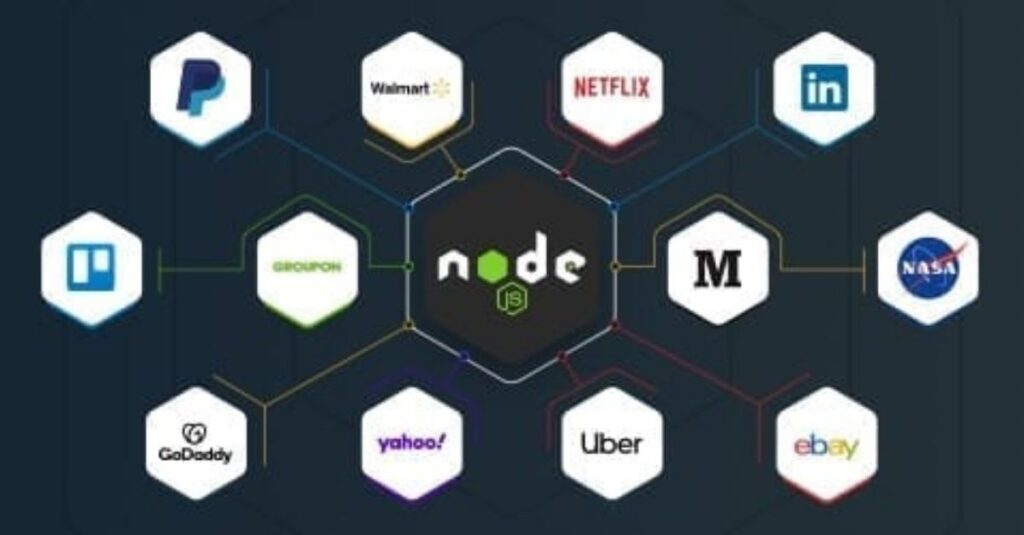
Many high-profile companies have adopted Node.js to power their platforms, and their success stories highlight just how versatile and performance-driven it can be. Here are some standout examples:
- Walmart is a well-known retail company operating department stores across the world. The asynchronous execution model of Nide.js allows developers to integrate multiple applications or services together. This means that the server can process multiple requests simultaneously without blocking. So Walmart app users can use one platform to access several distinct functions.
- One of the pioneers in integrating Node.js in production is Uber. They use such advantages as asynchronous primitives and simple, single-threaded processing. So the core trip execution engine was written in Node.js. It allows for managing large quantities of concurrent connections.
- For effective handling eBay-specific functionality, they changed Java to Node.js. The most common questions centered around the reliability of the stack and the efficiency, and the team chose Node.js.
- Groupon is another e-commerce platform that switched from Ruby on Rails to Node.js for both their mobile and web traffic. The main argument was the higher scalability for high traffic.
- Citibank integrated Node.js in its mobile services to provide fast and secure online financial services, developing capable plugins and core functionality for web apps.
Summing Up
In essence, NodeJS hosting is a game-changer for businesses that aim to build high-performing, scalable, and real-time web applications. It possesses an event-driven design with the smooth handling capability of simultaneous requests. Therefore, startups, businesses, and eCommerce sites opt for trustworthy Node.js hosting companies to gain speed, efficiency, and cost savings with a seamless user experience.
As the demand in the digital world rises, you can leverage the power of NodeJS hosting. Whether you’re creating a chat app, API, or business solution, NodeJS offers you the agility and performance you need to achieve your goals. Invest in high-quality NodeJS hosting today and make the smart choice—you’ll watch your business performance reach new levels.
Related Post

The psychology of color and shape in slot design: Encouraging…
In the competitive world of online and land-based slots, visuals are far…

