

How to Price Your Hosting Plans as a Reseller?

Pricing the hosting plans as a hosting reseller white label is all about strategies. You can’t pick any random numbers and impose them on your prospective customers. When you are a beginner, it is tempting to offer the lowest prices to attract customers. But such an approach can backfire if it doesn’t cover your costs or reflect the service quality. Continuously monitor the pricing structure that your competitors are charging and what features they are offering.
Moreover, brand positioning matters when you are targeting a specific niche. Your pricing must align with budget-conscious plans for startups or growing businesses. Furthermore, add the value of SSD NVMe storage, free SSL, or 24×7 support before becoming a web hosting reseller. In this guide, you will get the right strategy to ease the pricing activity.
Tips for Pricing Your Reseller Hosting Plans
1. Understand Your Target Audience
Before any price fix, you need to know precisely about your target audience. Are your potential customers small business owners, bloggers, developers, or agencies? Each group has customized requirements and budgets. For example, a startup may want some kind of cheap shared plan, while a digital agency may wish for a scalable solution with more features. Knowing your audience means you can shape your packages to make sense to them and price them better.
Who Are the Potential Audiences for Reseller Hosting?
Here are some key audience segments you might target, each with distinct needs and motivations:
| Audience Segment | Description | Pain Points | What They Value |
|---|---|---|---|
| Freelance Web Developers | Individuals building websites for clients | Easy client management, scalability, and branding flexibility | Hosting costs, client support, and performance issues |
| Small Digital Agencies | Teams offering web design, SEO, or marketing services | Simplicity, automation, and low startup costs | Reliability, support, ability to upsell hosting to clients |
| Tech-Savvy Entrepreneurs | People starting a side hustle or passive income stream | Lack of hosting knowledge, fear of tech complexity | Custom control, performance, and community features |
| Local IT Consultants | Professionals offering tech solutions to local businesses | Limited hosting expertise, need for dependable service | Trust, local support, bundled services |
| Niche Community Builders | People creating platforms for specific communities (e.g., artists, gamers) | Need for customization, community tools | Custom control, performance, community features |
When you serve a narrower segment of the market, you can offer specific features that they care about, such as more bandwidth, higher uptime metrics, or dedicated support. That way, you have a reason to price your product and even charge a premium when it makes sense. So, instead of targeting the most extensive consumer base, focus on promoting your best value to your selected target audience. By doing this, your pricing strategy will gain strength and profitability.
2. Analyze the Competition
Once you have identified your customer, you need to research your product. This means researching the market and analyzing what other resellers are offering. This will give you a realistic assessment of your web hosting plan and its potential. Browse competitors’ websites and check out their features, support systems, and pricing plans. Pay attention to where they position themselves in the market. Are they the cheapest option, or do they focus on high-performance and premium support?
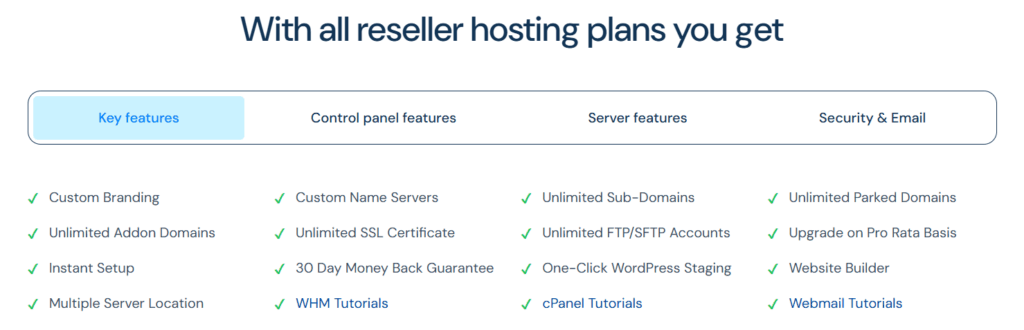
By learning what your competitors are doing, you can easily find ways to stand out. Highlight where you can outperform or differentiate, e.g., better support, more flexible plans, or niche focus. Charging low fees is not mandatory, but if you can offer more storage space or value through your services, higher prices are legitimate. Competitive research will help you set a fair market price without underpricing your services.
3. Factor in Your Costs
Pricing and cost are some of the significant considerations for booking profits. Beyond that, reseller hosting fee, any add-ons, marketing expenses, customer support tools, marketing expenses, and customer support tools. Once you have a clear view of your operating costs, you can build packages that are both attractive and profitable.
This is your base cost from the parent hosting provider:
- Monthly/Annual Fee: Depends on storage, bandwidth, number of cPanel accounts, etc.;
- Tiered Pricing: Some providers offer discounts as you scale;
- Add-ons: WHMCS license, dedicated IPs, SSL certificates.
Let’s look at your main expenses besides the hosting itself.
Software and Tools Costs
| Tool/Service | Purpose | Typical Cost Range |
|---|---|---|
| WHMCS or ClientExec | Client billing & automation | $15–$20/month (some free) |
| Backup Solutions | Data protection | $5–$20/month |
| Security Tools | Malware scanning, firewalls | $10–$30/month |
| White-label Branding | Custom dashboards, domain masking | Often included or $5–$10 |
Marketing Costs
| Channel | Cost Type | Notes |
|---|---|---|
| SEO & Content | Time or outsourced cost | Long-term ROI |
| Paid Ads | Google, Facebook, etc. | $100–$1000+/month |
| Affiliate Program | Commission-based | Pay-per-sale |
| Branding & Design | Logo, website, landing pages | One-time or ongoing |
Operational & Admin Costs
- Payment Processing Fees: Stripe, PayPal (~2.9% + $0.30 per transaction);
- Accounting & Invoicing: Software like QuickBooks, Wave, or Zoho Books.
Customer Support Models:
- In-house Support: Hiring staff or freelancers for Tier 1 support;
- Outsourced Support: White-label support from your provider or third-party;
- Helpdesk Software: Tools like Freshdesk, Zoho Desk, or Intercom.
If you set your prices too low before taking costs into account because your clients are demanding so much of your time and resources, you will find yourself operating at a loss, particularly as your client base expands. Instead, develop a cost-based pricing model that analyzes every plan based on the costs associated with it.
4. Offer Tiered Pricing Plans
Offering multiple pricing options helps you cater to several customers’ needs and budgets. Create a basic plan with limited features for beginners and mid-tier or premium plans with more resources for growing businesses. This way, you’re not forcing everyone into a one-size-fits-all package.
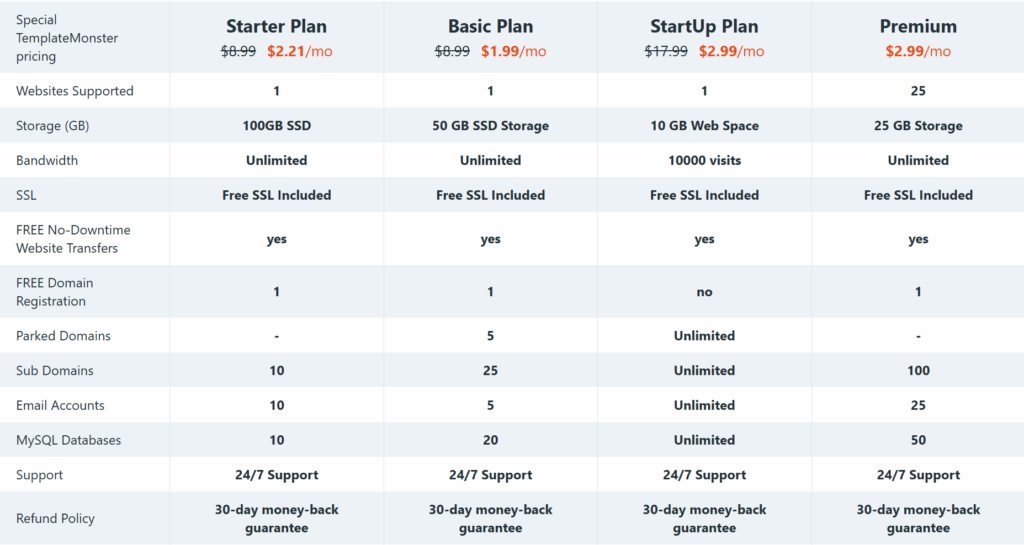
Tiered pricing also opens up the opportunity for upselling. A customer might start with your basic plan but move up to a higher plan as their website or traffic grows. It also helps you capture a wider market range, making your hosting services more flexible and scalable. The key is to structure your plans in a way that naturally guides users to the most value-packed option.
5. Communicate the Value Clearly
Make sure your website clearly explains what each plan includes and why it’s worth considering. Present the information in a structured and understandable manner. Use bullet points, comparisons, and visuals to help the customer understand what they’re getting. Highlight important features like unlimited emails, a one-click installer, or a 99.9% uptime guarantee.
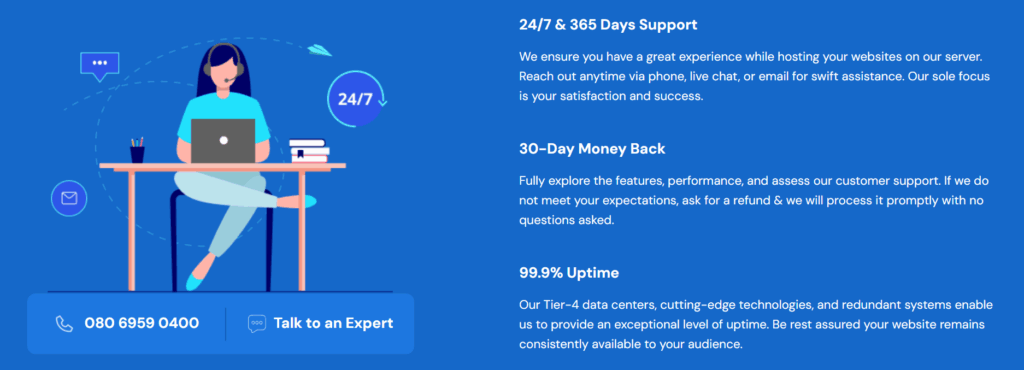
Build a bridge of trust with your customer through simple, straightforward communication without hidden terms and conditions. This can be another competitive advantage for you. If customers feel like they know exactly what they’re paying for, they’re more likely to buy from you. And they’re less likely to back out or ask for a refund due to broken expectations. Make your value proposition strong and crystal clear so that the price doesn’t feel like an expense, but rather an investment.
Conclusion
A correct balance of strategy is required to set the proper pricing structure of web hosting plans. Know and understand your audience, keep an eye on the competition, and build pricing tiers according to your audience’s needs. When done right, your pricing becomes a powerful tool to attract, convert, and retain customers.
Remember, it’s okay to tweak and test your pricing as you grow. Hosting is a competitive space, but with the right pricing model in place, you’ll not only stay profitable, but you’ll also build a loyal customer base that sees real value in your services. So, take your time, do your research, and price smartly—your reseller business website success depends on it.
Related Post

Illuminating The Future: The Revival And Evolution Of Customized Neon…
There's an undeniable enchantment that custom neon signs exude, an ethereal charm…

The Impact of AI on Software Testing: Revolutionizing Quality Assurance
The integration of Artificial Intelligence (AI) into software testing is transforming the…

